Into The Heart of the Earth
A Love Letter to the Colorado
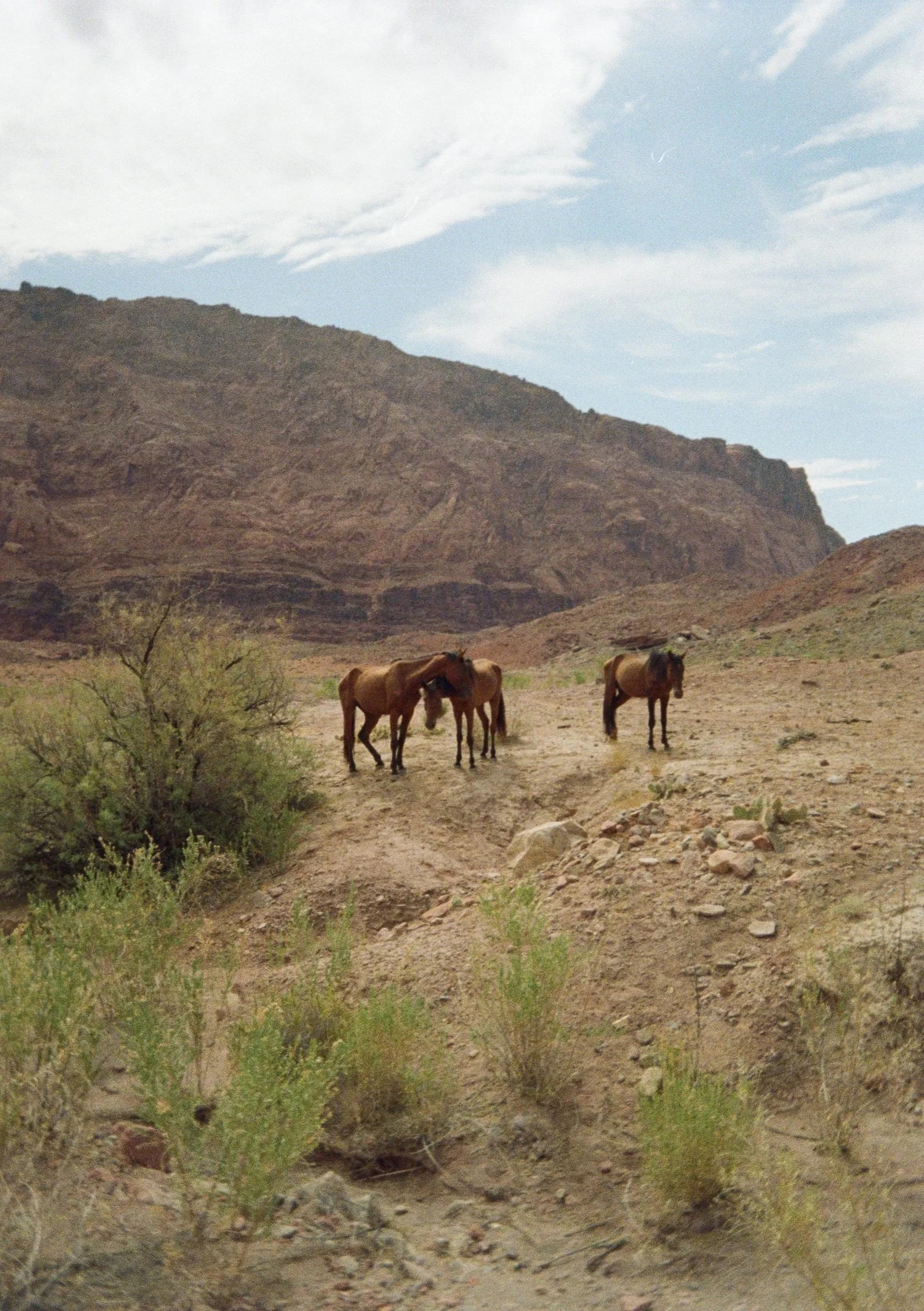
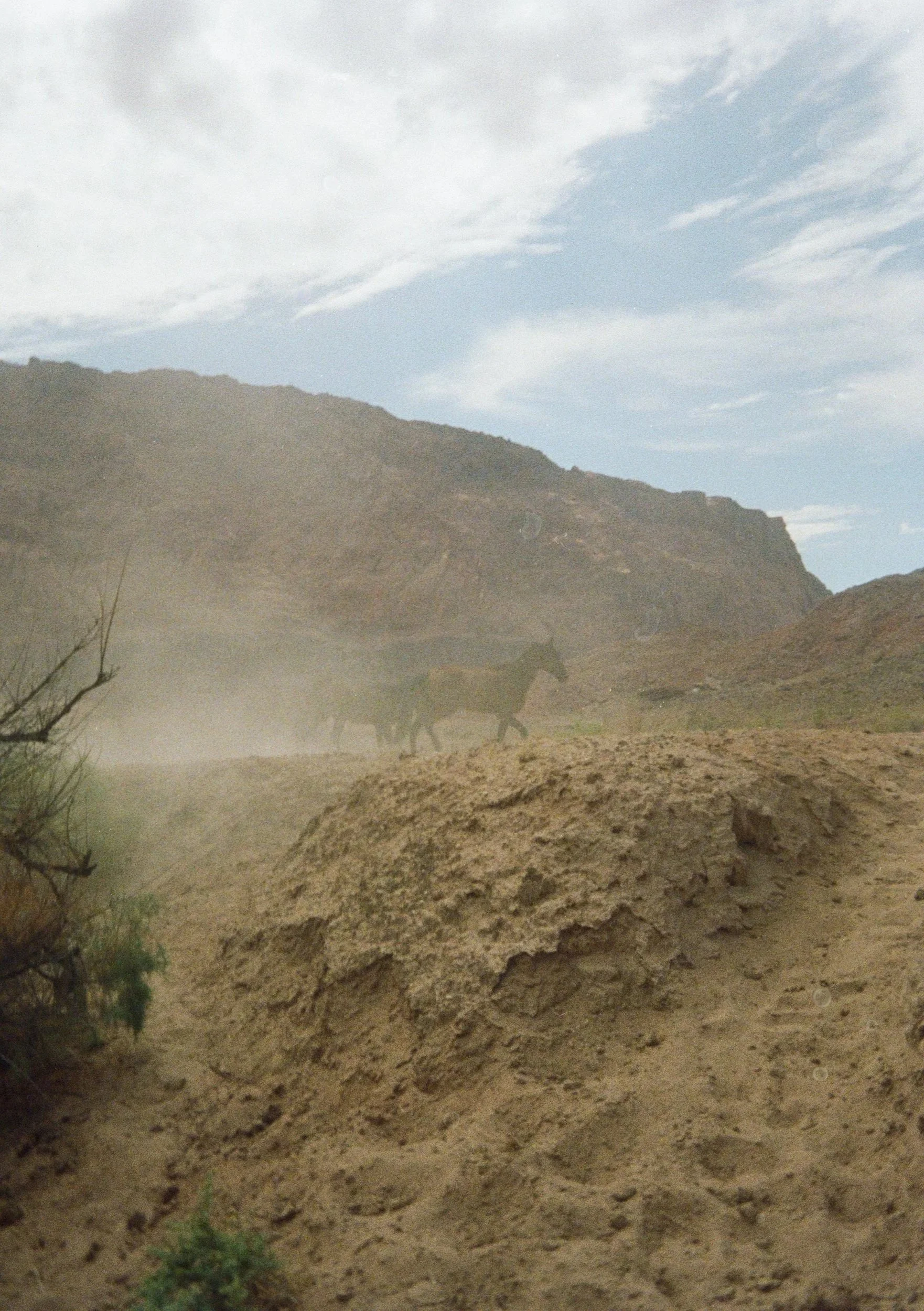
Silhouettes flickered behind a dust cloud like ghosts of a vanished West. Three horses grazed the floodplains of the Paria and Colorado rivers. To me, horses are a cultural symbol of something both vanishing and enduring. Cattle still hold capital in the West. Horses, some argue, are obsolete. But to me they are a reminder of our past. Beauty and history intertwined. And at the gates of the Grand Canyon, those horses felt like an omen. A welcome. A warning. A ghost story written in flesh.
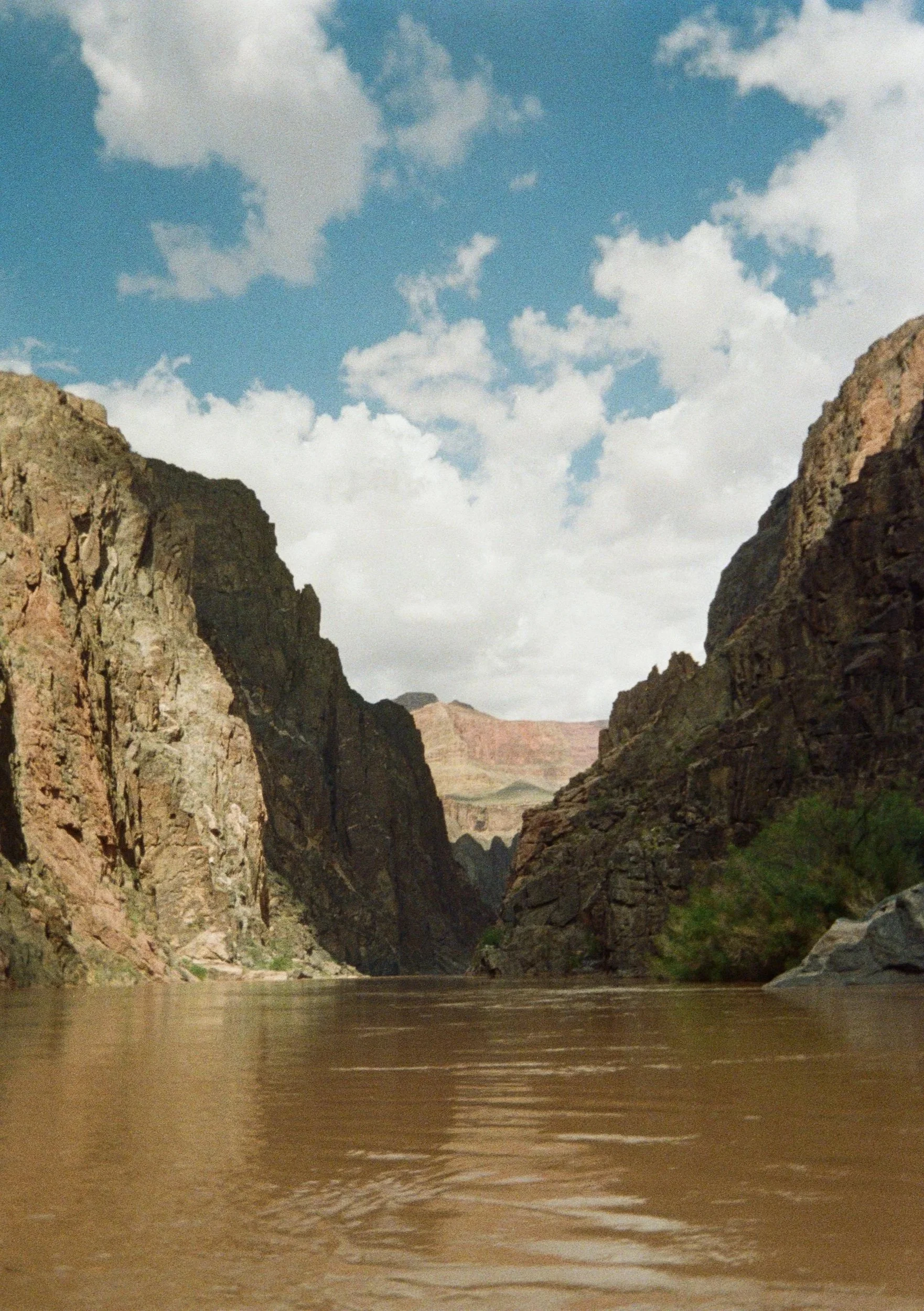
As development and progress continue to define the American West, the Colorado River flows heavy with silt and memory moving toward a future with a dead end. A river once whole is now fragmented by fifteen dams. The length of its body severed. America’s grandest river, which once carried its sacred sediments to the Pacific, now wanders into absence.
If rivers die, can they haunt? The Colorado feels like both—half alive but carrying with it the weight of what it has lost, and a future that can only sever it more.
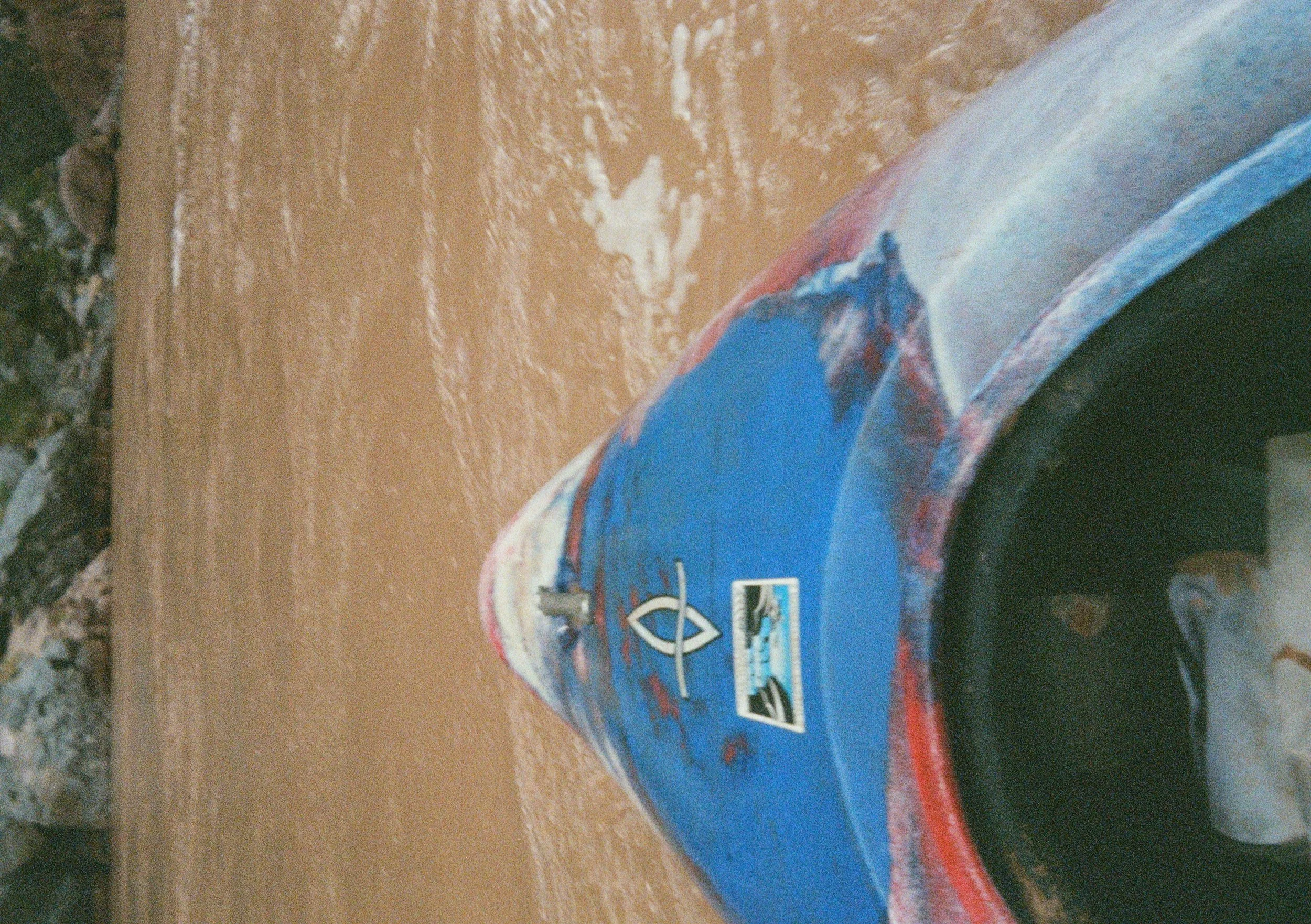
As I paddled the waters of the Colorado, the noise and distraction of my world outside quieted. I slowly learned the language of the canyon’s dark green swirls and rapids. Every mile past the confluence beneath Lee’s Ferry, the water’s language became easier for me to understand. The current became my canvas, and eventually, my boat became the paintbrush.
As the sun disappeared and took the colors of the desert with it, a moon lily opened to the black sky, waiting for the arrival of the silk moths.
I realized that the canyon is alive with quiet resilience even as ghosts and the threat of development lurk over its edges.
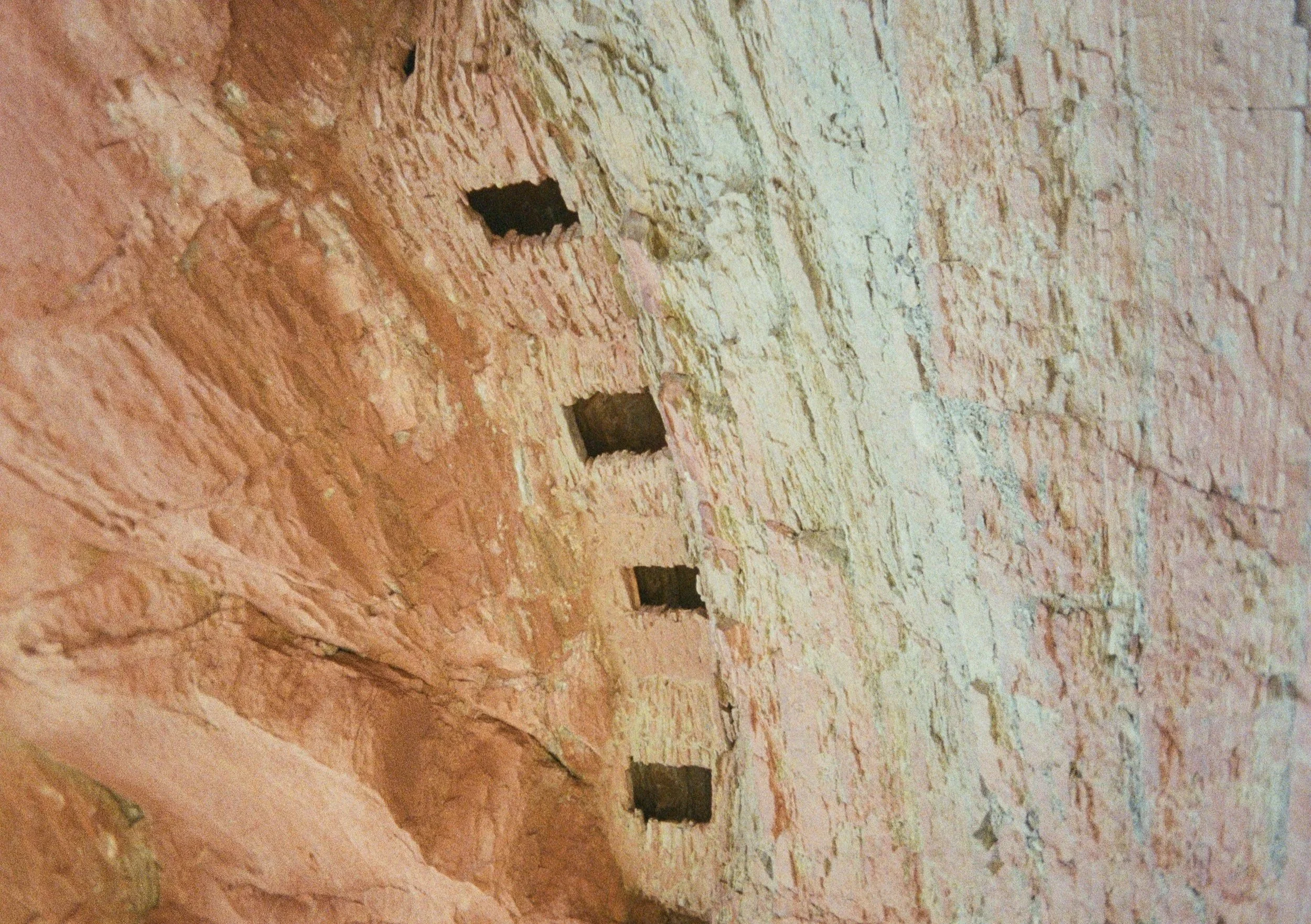
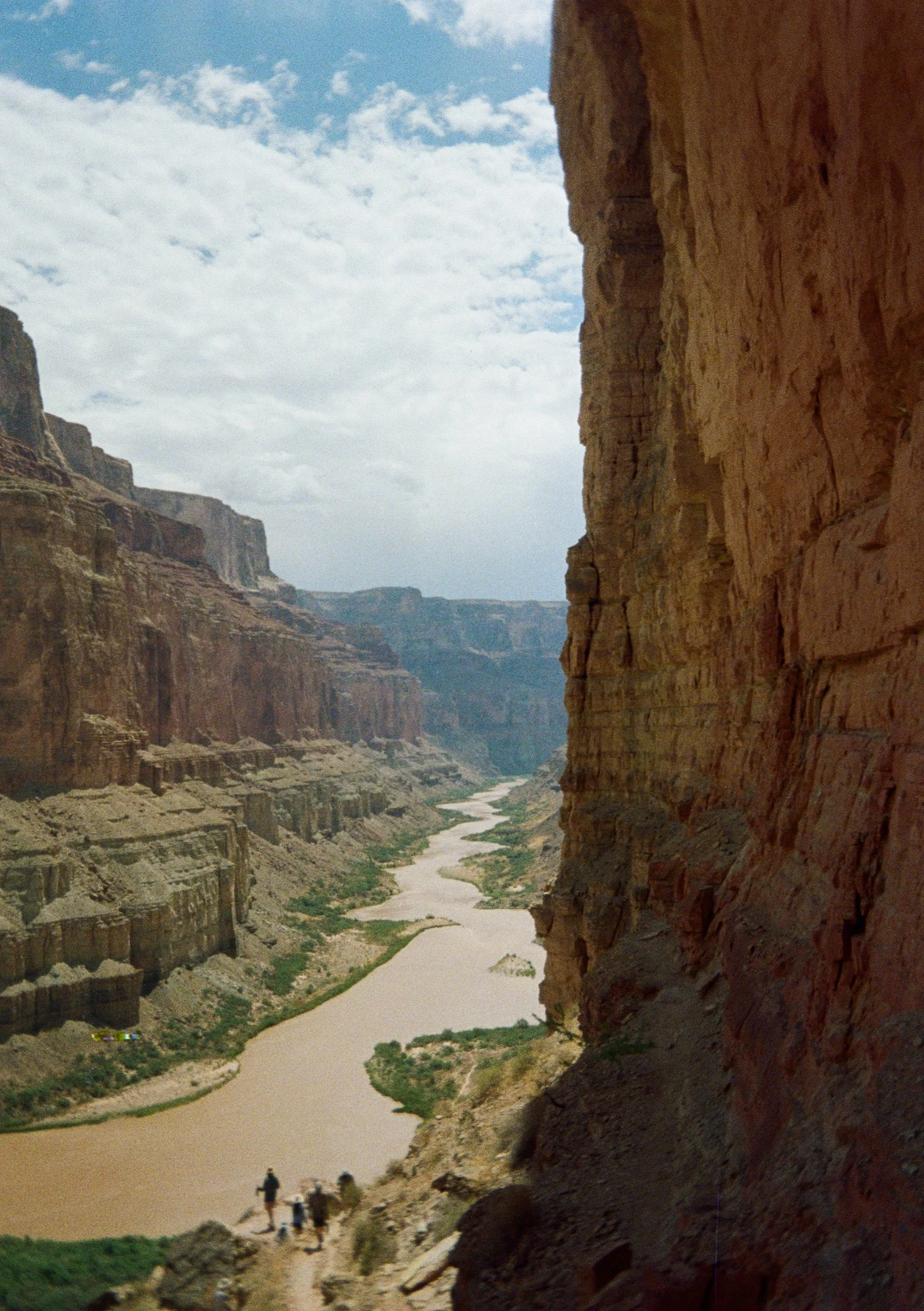
At Phantom Ranch, a hundred miles into the canyon, I felt my own heartbeat align with the pulse of the rock around me. The black schist of the Vishnu Group—some of the Earth’s oldest rock—throbbed like the Colorado’s ancient heart, still fighting silently for its freedom. Veins of pink granite, laced with feldspar and mica, sparkled across the walls like arteries carrying light. Just then, a swallowtail drifted past, as if its heartbeat too was inscribed into the canyon walls.
This is what stewardship means to me: showing up with reverence. Listening. Learning the language of the landscape—the manifestation of God’s paintbrush. I came of age on the rivers of the American West. My father passed down to me his love for water, for movement, for land. It is a lineage I carry with pride and responsibility. Because even when rivers become ghosts, they are still worth loving.
At Diamond Creek, on the last day of my journey, I shouldered my boat and stepped out beneath a wide, washed-out sky. I let the sadness of parting settle—not only from the canyon, but from the version of myself I only meet in places like this.
If rivers must become ghosts, then let them haunt us into love and in into reverence.
And if humankind has the power to alter the course of rivers, it also has the power to protect them. It is, and always has been, a matter of balance.
The Colorado may be turning into another ghost of the West. But its language still lingers—for those quiet, wild souls’ patient enough to listen.
By Chiloé Spelius
08/30/24